he late Billie Whitelaw, whom Samuel Beckett considered "a perfect actress", was on stage in the middle of rehearsals one day when she asked the playwright: "Where should I be looking?" To which Beckett replied: "Inwards."
Hearing this story, another Billie – the teen pop star turned Doctor Who companion and Olivier award-winning powerhouse Billie Piper – lets out a laugh so raucous and expansive, it is as if a flock of gaily coloured birds has been released into the room, flapping and squawking in every corner. "Fuck, that's awesome," she says.
It is mid-morning in a London hotel suite, and the 44-year-old actor is wearing a dress with wide gold-and-silver stripes and billowing sleeves. On the other side of the door, a big three-day press junket is under way to promote her new movie – the Oscar-tipped British tearjerker Elsinore – with assorted PRs, journalists and influencers bustling back and forth along endless corridors.
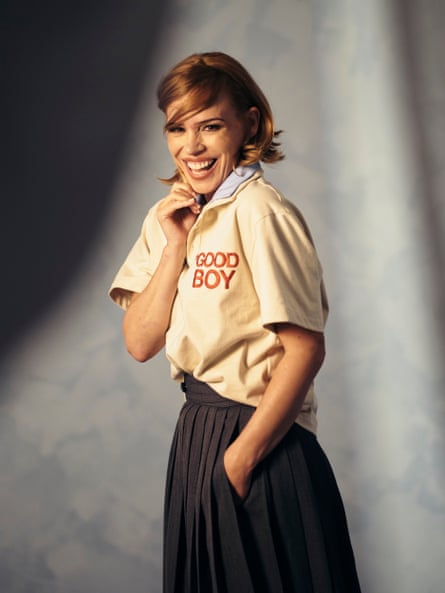
All is strikingly calm, however, in Piper's immediate orbit, at least once her laughter has died down. "Earthed" was one of four words used by Russell T Davies to describe Piper when she played the indefatigable Rose in his Doctor Who reboot in 2005 – the others were "primal", "beautiful" and "clever" – and within seconds of meeting her today, it is clear what he meant. There is instant intimacy ("Have we met before?") and informality ("Sorry, I've got tea on my hands") but, unusually, no publicist with her to monitor what is asked and how it is answered. Davies said of her, "the wattage of the woman [is] astonishing". And Piper is full of vitality, with enormous eager eyes, an animated expression and a hunger for stories.
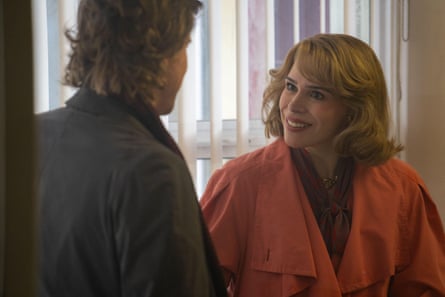
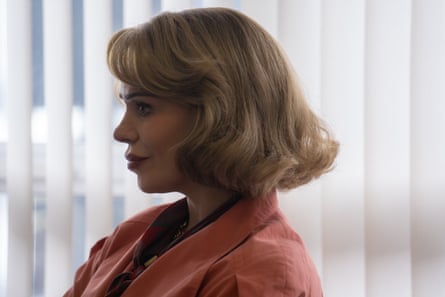
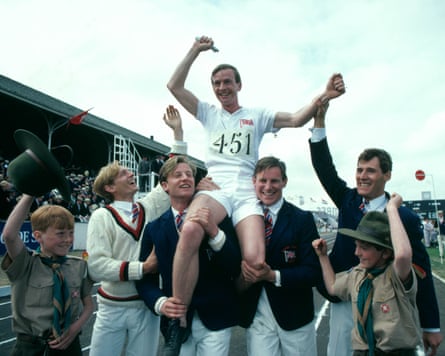
Hence her reaction to the Beckett anecdote, which I recount to her after she makes a startling admission: that her stage acting has always been a means of processing personal struggles. This is apropos Elsinore, which stars Andrew Scott as Ian Charleson, the actor best known as one of the leads in the Oscar-winning 1981 athletics drama Chariots of Fire. The focus in Elsinore is exclusively on the last months of Charleson's life, when he took on the demanding role of Hamlet at the National Theatre in autumn 1989 despite having Aids; he died in January 1990, seven weeks after his final performance. Piper, who was Scott's wife in Lena Dunham's medieval romp Catherine Called Birdy, dons a bouncy blond wig to play Charleson's best friend, the casting director Patsy Pollock. Her first words in the film – "Strong liquor, darling, as a matter of urgency!" – set out the character's stall rather nicely. "That line was the clincher for me in taking the role," Piper jokes.
She hasn't met the real Pollock, who worked on everything from Quadrophenia and The French Lieutenant's Woman to Mission: Impossible and Chicken Run. Pollock's first credit, in fact, was on the trippy 1970's mind-bender Performance, which – small world! – starred James Fox. Piper's former father-in-law, that is, from her marriage to his son, the actor and Reclaim party leader Laurence Fox, who received 347 votes in the recent Clacton byelection.
"I'm not sure how closely Patsy wanted to be involved in Elsinore," Piper says. "I can't imagine it's an easy thing for her to revisit. But she has seen the film and apparently enjoyed the …" It takes a few seconds for her to say the next word – "performances" – which might indicate wariness about speaking on someone else's behalf or modesty (perhaps Pollock commended the portrayal of her, and Piper is reluctant to brag).
In Elsinore, we see Pollock making soup for her chum, offering morsels of tittle-tattle as if they were mugs of Lemsip, and generally cheering on his mission to turn a personal reckoning with mortality into a courageous rendering of the tortured prince. In one scene, she refuses to be sent away simply because he has found a Kaposi's sarcoma lesion on his face: "If you think I'm the sort of person who'd never kick a door down," she bellows through the letterbox, "then you haven't been paying attention, darling."
It is no mystery what Pollock contributed to Charleson's life. But what did get from ? "I think they were kindred spirits," says Piper. "She loved him as a friend. They partied together and played together. She was a single mum and Ian was a big part of her daughter Alice's life: he was integral in raising her. And she saw an acting potential in him that other people in the industry were maybe missing slightly. She saw how gifted he was."
The film shows Charleson coming under pressure from the artist and film-maker Derek Jarman (played by David Dawson) to be open about his sexuality. Is the situation different today? "Whether it's people coming out or #MeToo stuff, I don't know how much has really changed. Some things are arguably worse." Such as? "This idea that women are always looking out for each other now, aligned in a sisterly way, is not strictly true. It's still a bit of a bloodsport. We're pitted against each other and it can breed hostility. People's behaviour within the industry is better, I guess. You feel more supported, but there are still bad apples. As for coming out … I dunno. Do people need to keep announcing these things? It feels like it's up to you."
Charleson makes the argument that the audience should see the role and not know too much about the actor. "Yeah, but nowadays we have social media," Piper says, grimacing slightly and admitting she has "many struggles" with it. "I do a bit of it but I'm cautious because it's useful to be unknowable." Why do it at all? "I feel uncomfortable about it but there is also an element that feels creatively interesting. Then there's the part that is purely about ego and commerce, and the idea of relevance." She frowns. "What I'd to do is just completely turn the fucker off – but I don't."
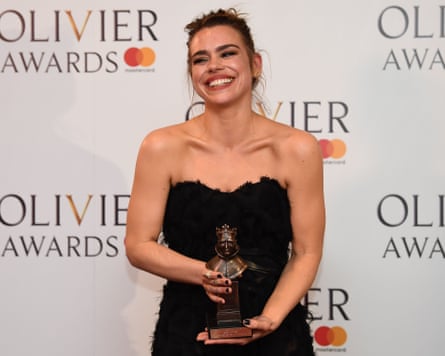
Scott is already expected to make a clean sweep of this season's best actor prizes, up to and including the Oscars next year. Don't count Piper out either. Both are acting heavyweights: Piper won an Olivier award for playing the lead in an electrifying 2016 update of Federico García Lorca's Yerma, staged by her Elsinore director Simon Stone, while Scott has two Oliviers to his name. He also played Hamlet in 2017. Did Piper see that acclaimed production? "I didn't," she says guiltily. This is followed by a conspiratorial aside – "Is it on NT Home?" – and another giddy laugh.
Has she been offered Hamlet? "No … I've not … been offered … Hamlet," she says, repeating the words back to me very slowly as if suspecting that I'm pulling her leg. "I don't fantasise about doing Shakespeare. The natural choice that I've talked about in the past is Lady Macbeth. But I don't know. It would have to be a radical retelling."
Yerma was certainly that. Stone's version reimagined Lorca's desperately childless protagonist as a 21st-century oversharer who broadcasts her woes in her blog. With the action unfolding inside a giant Perspex box on stage, and incorporating a grungy Glastonbury sequence, Piper whipped up a cyclone of mud, sweat and tears. Susannah Clapp in the Observer called her "earth-quaking" and noted her "banshee fury". Ben Brantley in the New York Times said it was "one of those performances that leave you bruised, breathless and grateful for an experience you wouldn't have missed for the world." (And yes, Yerma on NT Home.)
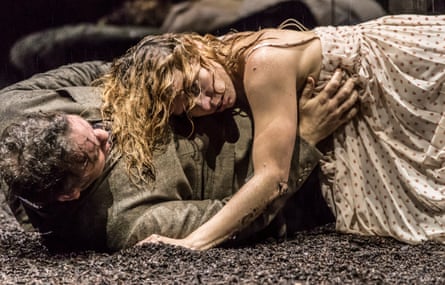
Hamlet may not be in the offing for her but Yerma must have been comparably exhausting. I ask how it changed her – which is when she casually mentions the relationship between personal crisis and onstage catharsis.
"It depends where you are in your personal life," she says. "That's why I understand Ian's instinct to play Hamlet when he was losing his life. To some people, that might seem insane. But when I think back, I've only ever done theatre at points in my life where I've been struggling. I wonder if it's just because, as an actor, that's how you process the things that are happening to you. Unconsciously, you're drawn to something that is either going to help you escape what you're experiencing personally, or help you process – or maybe a bit of both. If I had been in a better space personally when I did Yerma, I actually think I would've found it harder to do."
Because there would have been more of a chasm to bridge between herself and the character? "Yeah. I was quite an open wound when I played that part so I had a physical need to put that somewhere." Is she alluding to her breakup from Fox, with whom she has two now teenage sons? "I was going through a separation, yeah. And the time before that, I was processing pregnancy. And the time before that, I was …" She trails off. "There's always been something that aligns with these monumental events in my personal life."
Even when the role doesn't correlate directly, work has been a solace. Davies writes in his recent industry memoir The Queerest of Folk about how Piper soldiered on through Doctor Who during her first, very public divorce from the DJ Chris Evans, whom she married when she was 18. "She was crying in a cupboard," writes Davies, "and I thought: Oh, God, she's going to leave! But she just kept going like a demon."
I ask whether she actively sought out Yerma as her marriage was disintegrating. "For me, that was about stars aligning. Without getting too spiritual about it, I do find it weird that the part landed in my lap at a time when I was going through something really upsetting. Even though the thing that was destabilising my life wasn't the inability to get pregnant, which is what Yerma goes through, a lot of my closest friends were dealing with the success or failure of IVF. It was a mad storm of my grief, their grief – and then this part lands that changes everything for me."
Charleson says in Elsinore that you need "the whole fucking world inside you" to play Hamlet, which comes back to Beckett's idea of looking inwards. "That's what it's like," says Piper. "But some people might say that sounds like actor bullshit."
This is typical of the way she polices herself for anything bogus or indulgent. Talking earlier about the tingling thrill of standing on stage at the National Theatre, which Charleson does in the movie and Piper has experienced twice, as the star of Lucy Prebble's psychological drama The Effect and Richard Bean's state-of-the-nation comedy Great Britain, she said: "Like an arsehole, I'm even getting emotional thinking about it now. It's so much about community. I love the problem-solving in rehearsals. I love making beyond-intense friendships with people as you throw yourself off the cliff every night." She would often stroll around the stalls at the National before the audience came in, then stand on stage gazing out at the empty seats. "It's a control thing. It's like: you were there first."
She is certain about returning to the stage. "I will. It just has to …" Coincide with the next crisis? Another laugh, rueful this time. "Exactly. But don't worry. There's always one around the corner."