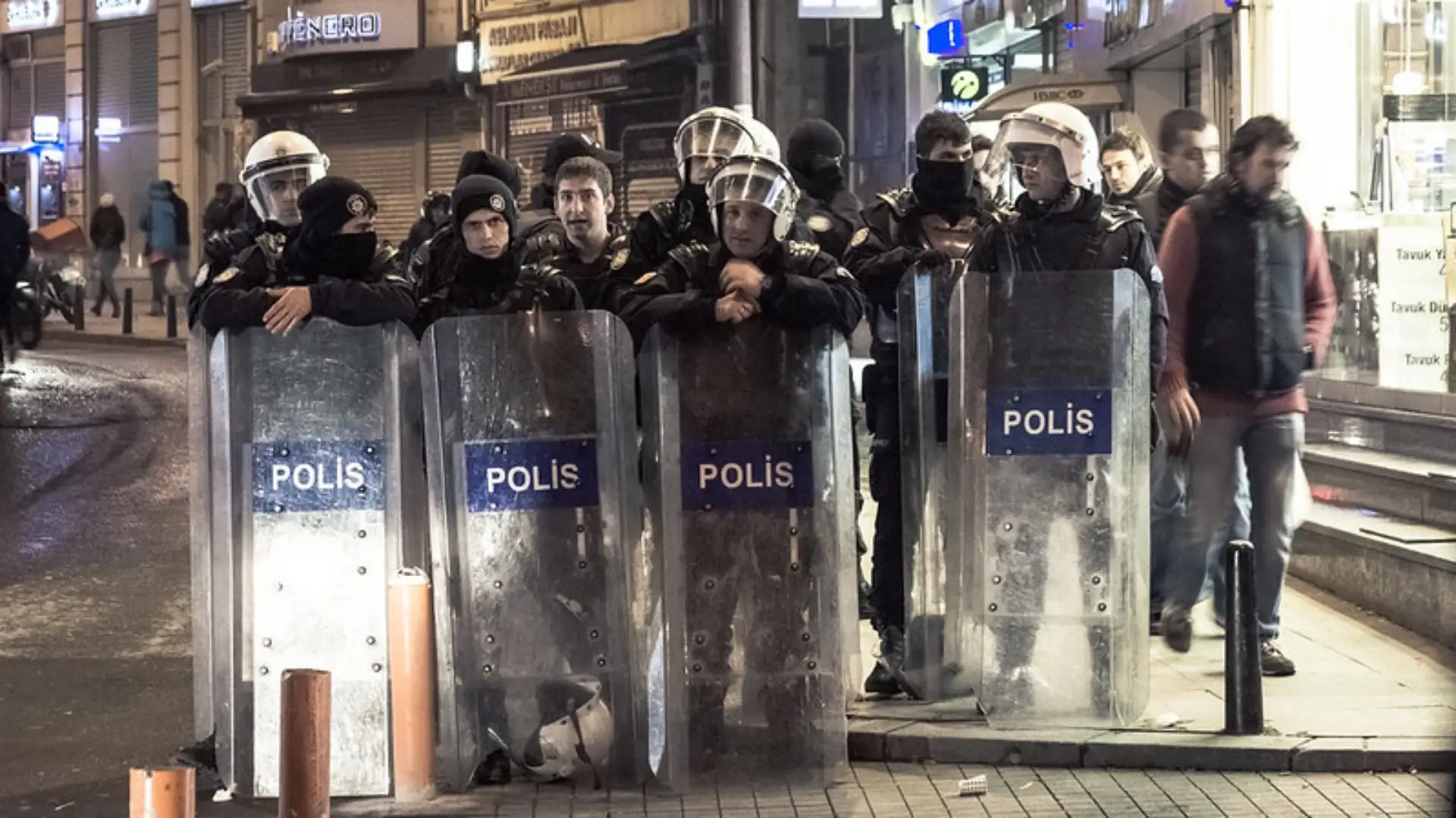
’s government has denied targeting LGBTQ+ people and organisations through its ‘My Family is Safe’ operation, insisting the investigation is focused on “criminal activity, public order and the protection of children”.
The response comes after Council of Europe Commissioner for Human Rights Michael O’Flaherty raised concerns about the operation and its impact on LGBTQ+ people and organisations.
In a to Turkey’s Ministers of Justice and Interior, he highlighted concerns over restrictions on freedom of association and expression, detention conditions and access to legal representation.
Turkey’s “My Family is Safe” operation
Turkey’s ‘My Family is Safe’ operation was launched on 12 September 2026. The government says it aims to protect children from “obscenity”, including material portraying same-sex relationships and gender ideology displayed by LGBTQ+ organisations and venues.
Writing about the scale of the operation, O’Flaherty said: “I have been informed that more than 100 people, including 44 human rights defenders and activists, including board and oversight committee members of LGBTQ+ organisations, have been detained, and that the majority of them have been remanded in pretrial detention.”
He said he had received messages expressing concern over detention conditions, alleged ill-treatment and access to basic necessities.
Challenges faced by detainees
“Another concern brought to my attention relates to the lack of prompt and effective access to a lawyer,” wrote O’Flaherty, claiming attorneys had faced difficulties in “accessing investigation files, meeting clients confidentially and representing more than one detainee.”
He said this raised concerns over potential breaches of fair-trial protections under Article 6 of the European Convention on Human Rights.
The commissioner warned that investigations into LGBTQ+ organisations appeared to target their everyday activities, public work and funding in the aim of shutting them down.
He said the European Court of Human Rights had established that closing organisations should be a last resort, based on compelling and individualised grounds.
“Hundreds” of social media accounts and websites blocked
O’Flaherty also raised concerns about the blocking of “hundreds” of social media accounts and websites, including those belonging to journalists, media outlets and human rights organisations.
“The European Court of Human Rights has established that freedom of expression constitutes one of the foundations of a democratic society. Any restriction must have a clear legal basis, pursue a legitimate aim and be necessary and proportionate,” he argued.
However, Turkey’s rejected the commissioner’s suggestion that the operation is targeting LGBTQ+ organisations, insisting it was prompted by reports of alleged criminal activity.
Turkish government denies “discriminatory action”
The responding stated: “No discriminatory action was taken with the intention of targeting specific associations or specific individuals in the course of these procedures.”
It added: “The said investigation solely focused on the public order and the protection of the rights of the victims.”
The government also disputed the commissioner’s suggestion that investigations are targeting the ordinary work of LGBTQ+ organisations, arguing that they concern alleged criminal offences.
“The Turkish Government highly doubts that offences relating to ‘obscenity’, ‘prostitution’, ‘narcotic substances’, ‘unregistered firearms’ and ‘sexual abuse and exploitation of children’ could be considered as falling within the scope of the ‘ordinary functioning of LGBTI organisations and their public activities’ as claimed in the Commissioner’s letter.”
On allegations of ill-treatment of detainees, Türkiye rejected the claims, stating: “The Republic of Türkiye pursues a zero-tolerance policy towards torture and has enacted legislation providing for strict and severe sanctions against acts of ill-treatment, contrary to the allegations in the Commissioner’s letter.”
Turkish authorities say social media accounts displayed “pornographic” content
Regarding the blocking of LGBTQ+ social media accounts, the government says some social media content contained material it considered potentially criminal.
“Particular attention was paid to overtly obscene posts of sexual, pornographic or provoking nature that contradict with morality, undermine the Turkish family structure protected by the Constitution and, in particular, adversely affect the psychosocial development of children.”
Turkey’s says the investigation followed the law, adding: “Through the conduct of this judicial process, relevant provisions of the European Convention on Human Rights (ECHR) (Right to respect for private and family life (Article 8), Freedom of expression (Article 10), and Freedom of assembly and association (Article 11)) were meticulously considered.”
While homosexuality is not illegal in Turkey, queer people face increasing threats. With no comprehensive anti-discrimination laws in place and anti-gay rhetoric often used by the country’s politicians, human rights organisations have called, and continue to call, for action.