n 2011, Tulisa Contostavlos was at the peak of her powers. At 22, the N-Dubz singer turned solo artist had landed a coveted position as a judge on The X Factor, stepping into Cheryl Cole's towering stilettos. As she puts it here, her pitch to X Factor supremo Simon Cowell was simple: "You're gonna need someone to sit there and look pretty and cry when [there are] emotional moments, and you're gonna need someone to tell people they're rubbish when they're rubbish – and I'm gonna do both." Cowell hired her on the spot, she says.
Tulisa was a household name, but sections of the British media treated her with contempt, with headlines that played up her working-class background and labelled her a chav. Much of this three-part series is concentrated, however, on the most egregious example of the press turning on her: a sting by the Sun on Sunday in 2013, which saw Tulisa groomed into believing she was auditioning for a Hollywood film over the course of several months. Eventually, she was asked to supply drugs to a producer, and – under pressure to please her new bosses – passed a phone number to the infamous Sun journalist Mazher Mahmood, AKA The Fake Sheikh.
Looking back, it's hard to believe that this setup – disgusting and drawn-out as it was – went as far as it did, with Tulisa arrested and charged with helping to supply cocaine to Mahmood. While a trial later fell apart, she says she attempted to take her own life in 2013.
Today, Tulisa lives in "the middle of nowhere" in Cheshire, where she leads a quiet life that's heavy on organisation (we get a peek into her alphabetically arranged spice cupboard, where she runs "a very tight ship"). If some of this footage feels like filler, it does build a picture of somebody who has largely retreated from the public eye.
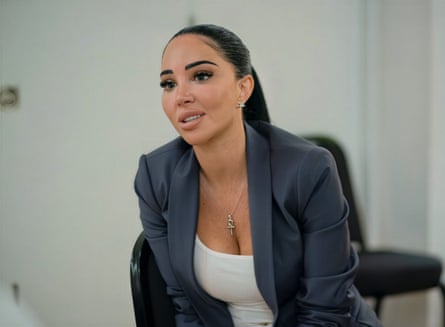
That is slowly changing, however. Tulisa: The Reckoning isn't just a documentary about the trauma of being chewed up and spewed out by the tabloids, but also about using that experience to push for change. (The aim, she says, is to "raise a bit of hell".) She meets the campaign group Hacked Off; Labour MP Josh Newbury; the Lib Dems' Anna Sabine; and a grieving mother, Mandy Garner, whose daughter Anisha was killed in a hit and run, and whose last moments were captured on a shop's CCTV camera and published by the MailOnline. We see Tulisa take her campaign to the press (she was interviewed by the Guardian, among others) and launch a petition, calling for tighter media regulation. She takes particular aim at the Independent Press Standards Organisation (IPSO): the regulatory body, which is funded by a consortium of UK newspapers and magazines, has never opened a standards investigation and has never issued a fine to the British media since its formation in 2014. (IPSO, for its part, sent the programme-makers a statement in which it said that claims it was "run by the press" are wrong, and emphasised its commitment to "transparency and independence". It said that comments made about its complaints outcomes are also "misleading", adding: "Our approach is always to intervene at the earliest stage, before [a standards investigation] is needed.")
Tulisa is an excellent public speaker, a passionate advocate, and easily disarms almost everybody she meets here with a hug and a heartfelt conversation. But The Reckoning feels like a slightly misleading title. This is a docuseries that takes in so much – not just the entrapment, but a sex tape that was essentially proto- "revenge porn"; coming up as a member of N-Dubz, when the papers treated the group as "three little chavs that got lucky"; her mother's mental health (she has schizoaffective disorder, and was the subject of Tulisa's 2010 documentary My Mum and Me); the death of Professor Jason Arday, and more – that it sometimes feels as though there's little room to fully explore how she really wants the press to change. Should papers be forced to print more prominent corrections? And is a possible £1m fine enough of a deterrent for companies that make hundreds of millions – sometimes billions – in revenue each year?
The voice of somebody who has worked on clickbait content could also have added something – a debate? An explanation? – to a programme that sometimes feels as though it treats the tabloids as an abstract concept. Of course, they are part of a powerful machine that exists not just to stir up contempt and drama but also to make cold, hard, advertising cash.
Still, this is an important topic, and anything that brings awareness to it is commendable. Newbury is preparing for that aforementioned parliamentary debate in 2027, while Tulisa and Sabine have met the culture secretary, Lisa Nandy. "Of course I'm gonna keep pushing," she says, at the end of episode three. "I'm just starting it … if you're gonna do it, see it through."
Tulisa: The Reckoning is on Paramount+