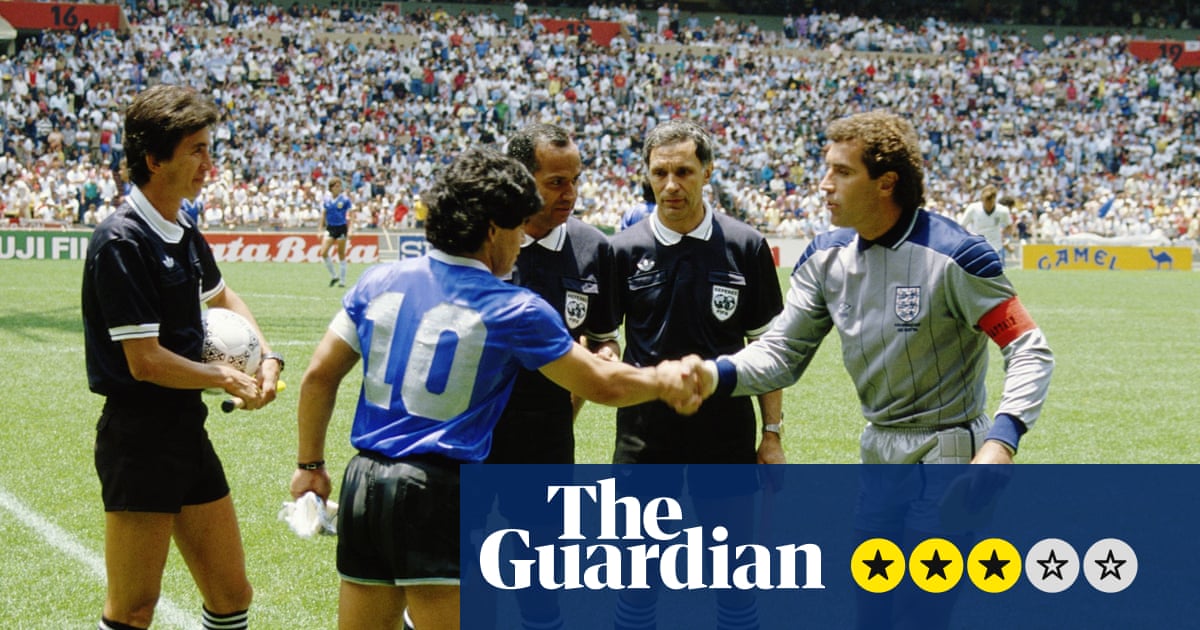
ere is a football documentary that is a cut above the drain-clogging content that loiters in streaming platforms everywhere. Its subject is the World Cup quarter-final contest between Argentina and England in 1986, a game constantly replayed in the collective consciousness for the two never-to-be-forgotten moments contributed by Diego Maradona: the illicit "hand of God" goal that gave Argentina the lead, and then five minutes later his sublime second goal, for which he skipped past half a dozen of the England team before slotting the ball home with the outside of his foot. It was this second strike, voted in 2002 as Fifa's goal of the century, that partly lanced the boil of English rage over Maradona's outrageous cheating; what could they do in the face of such authentic genius?
Over and above football matters, it's clear to see that there were bigger things at stake. Rather obviously, it happened only four years after the Falklands war, which thoroughly poisoned already tense relations between Britain and Argentina. The Match situates the 1986 clash as part of a continuum of strife, dating back at least to the arrival in 1765 of a British sea captain, John Byron, on the Falklands to claim them for Britain. Other key moments: Argentina's Antonio Rattín getting sent off during the 1966 World Cup, and Maradona being invited on stage by Queen to sing Another One Bites the Dust during their mammoth 1981 South American tour.

The film's central wheeze is to collect together some of the original players on both sides, and have them talk through their recollections: Gary Lineker, John Barnes and Peter Shilton for England, and Jorge Burruchaga, Jorge Valdano and Julio Olarticoechea among the Argentinians. Some fascinating details emerge, such as the boiled sweets one player buried in the pitch, or that Argentina's distinctively shiny dark blue shirts were acquired only 24 hours before the game started. Both sets of players show a sort of stoicism over the game's sensational events, though for Shilton it clearly – and understandably – still rankles.
Argentinian co-directors Juan Cabral and Santiago Franco try hard to appear even-handed, with a moody philosophical introduction – "When does a match start? When does it end?" asks the opening title card, and interviews with soldiers on both sides of the front line in the Falklands. If perhaps the directors' instinct is to be in Argentina's corner, then that is understandable; it could certainly have stood a bit more context in Argentina's seven-year military dictatorship and the resulting "dirty war". But the main sense here is of a film looking for a spirit of reconciliation, and a final contest over a table football game suggests they may well have found it.