Long before the Admiral Duncan or , an iconic tearoom in Piccadilly, was the place for queer Londoners to meet. Known as the “Lily Pond”, the Coventry Street Lyons’ Corner House became a haven for generations. This space has now been reimagined for the new London Museum. Created by artist Lauric Mahe Stephenson, the Tales from the Lily Pond display brings to life the hidden history of the tearoom and the people who shaped it.
At a time when sex between men was still illegal, and people faced routine discrimination and abuse, there were places in London that welcomed queer people. Between 1909 and the 1950s, one of the most iconic was a section of the first-floor restaurant of Lyons’ Corner House on Coventry Street, Piccadilly.
Coventry Street, J. Lyon’s flagship restaurant complex, opened in style on New Year’s Day 1909. Here stood a grand Art Deco building with a food hall, cafes, restaurants and other services, and it promised ‘light meals, light charges and light music.’ Affordable to the middleclass and many working-class customers, Corner Houses were also considered appropriate places for unescorted women, who often faced social stigma or harassment when dining alone in this period. Coventry Street was also – discretely – welcoming to gay men, becoming an important meeting place in Piccadilly, the heart of queer London in the 1920s and 30s.
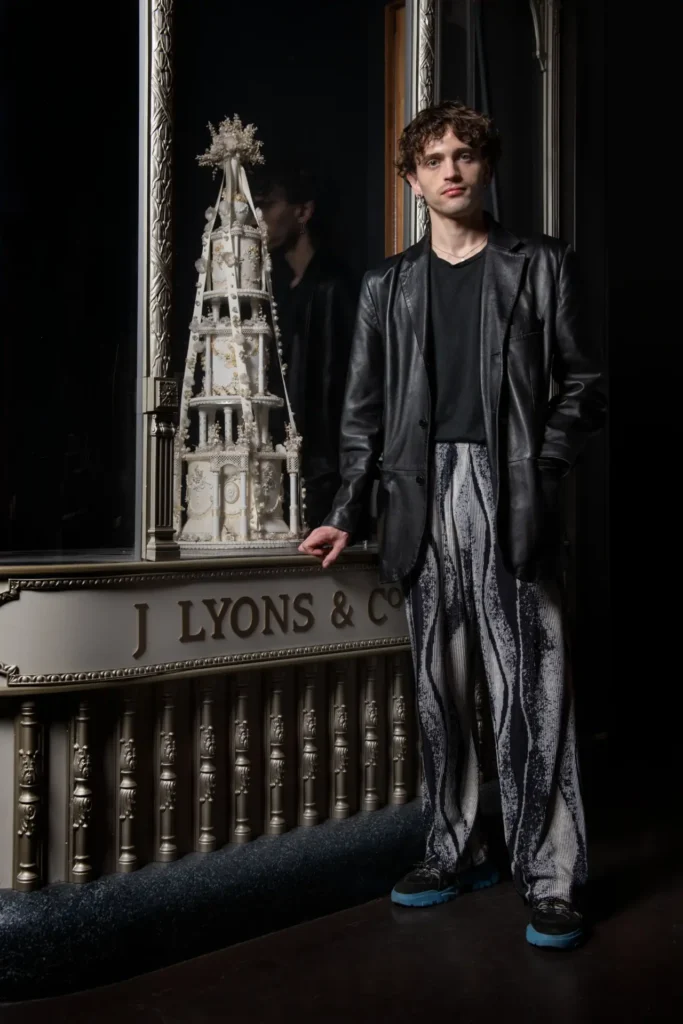
Nicknamed after the water lilies adorning its wallpaper, the Lily Pond was a favourite local for queer Londoners. Coined the “absolute mecca of the gay scene” by John Alcock in the 80s, “the Lilypond was designated down one side of the restaurant where all the gay boys used to sit […] and exchange chat and go from table to table talking to one another”. It also had an unofficial dress code. Clothing and style offered subtle clues about who belonged, but discretion remained essential. Men considered too conspicuous risked being ejected, while moral campaigners complained about the venue’s clientele. In June 1925, Harold Begbie, styling himself ‘The Man with a Duster’, complained in John Bull magazine, of “a well-known teashop and public house in Coventry Street where painted and scented boys congregate every day without molestation of any kind …sit[ting] with their vanity bags and their high-healed [sic] shoes, calling themselves by endearing names and looking out for patrons.’”
By the 1930s, the waitresses – known as nippies – were encouraging women to sit elsewhere, helping to keep the Lily Pond as a sanctuary for gay men. In later decades, however, “the girls started to get in” according to Ellen, a lesbian woman who worked as a dancer in the West End.
Despite its continuing popularity, J. Lyons was losing money by the 1960s and began selling off its businesses. Coventry Street closed in 1970, and the company stripped its iconic Art Deco interiors. But one feature survived. A bay windows (built during a 1922 refurbishment) was saved and gifted to London Museum as a memorial of the company’s place in the city’s history. And it would eventually find itself at the centre of a fabulous queer revival.
Putting the Lily Pond on display
So how do you bring a place like the Lily Pond back to life when no visual record of it survives? It’s a question we grappled with as we developed the galleries for the new London Museum. The surviving bay window has previously been displayed with objects telling the history of J. Lyons and the democratisation of eating out. Now, the reopening of London Museum creates the opportunity for a redisplay, this time focussing on LGBTQ+ history. Without historic photographs of the people who shaped this space for London, the curatorial team decided to bring history to life with an imagined view through the window to the Lily Pond created through an artistic commission, with historical advice from historian Professor Matt Houlbrook.
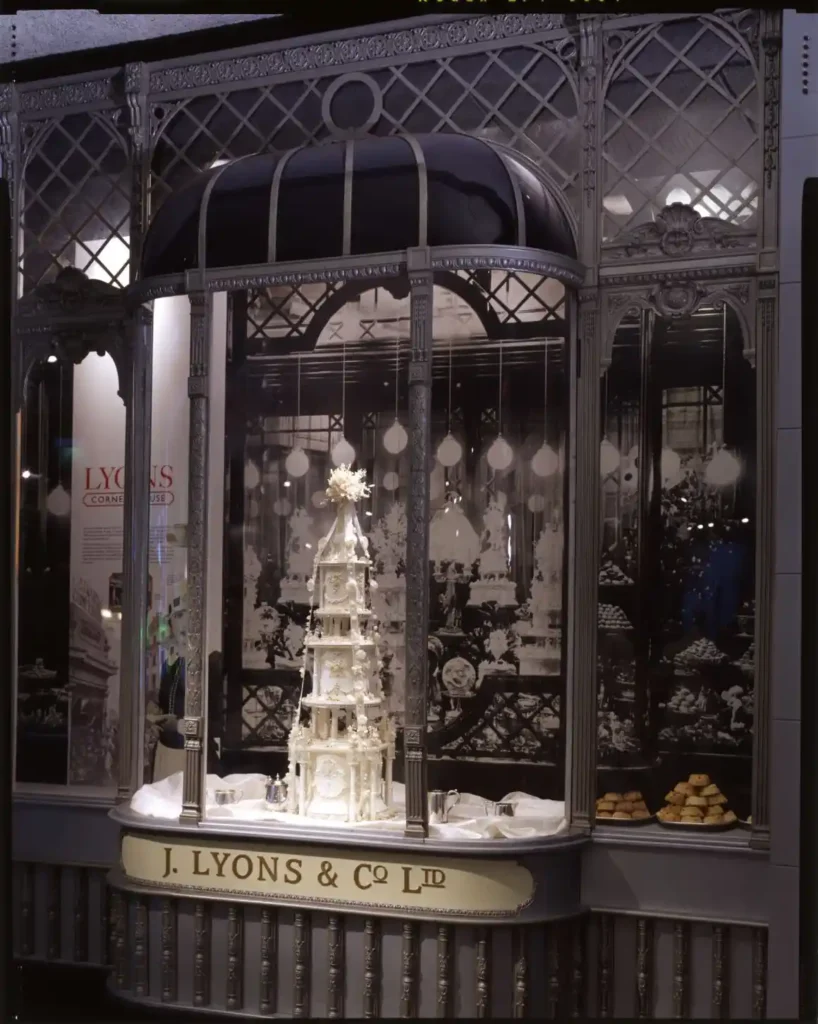
Tales from the Lily Pond
Enter French-British visual artist Lauric Mahé-Stephenson for the commission whose practice explores empowering representations of queer identity and sexuality by mining the history of art, myth, fairytales and memory. Drawing on historical research and advice, while embracing the lack of visual evidence to leave space for imagination and fantasy, his approach playfully combines a photograph of a staged tea party with a digital drawing. Rather than a life-like reconstruction, models with lived experience of London’s LGBTQ+ communities wear period costumes with subtle expressions of queer identity: red ties, spotted scarves, perfectly waved hair, a sweep of lipstick, rouged cheeks and powder, and chic cigarette holders. One of the most moving contributors to this commission is Cloud, one of the models and 81 at the time of the shoot who visited Lyons as a young man. He remembered living “as an out gay man during the time when male homosexuality was illegal and scorned by most UK citizens” and described Lyons as “a home away from home for us”. The younger models learned about the Lily Pond through the process, with one of the models, Emilia, being “excited by the opportunity to connect with a significant part of London’s history which is rarely spoken about”. Another, Yasmeen remarked that the “safe space of the Tearooms very much came to life on set, with laughter, comfort and connection”, while Charlie felt “honoured to […] pay homage to my Queer ancestors”, reflecting that “the role of historic queer spaces and community has shaped the way the queer community now relate to the world around them.’
The original Lily Pond may have disappeared from Piccadilly in the 70s but in 2026, its story is “an inspiration for future generations”, according to model Adri. The final artwork has now been installed behind the original Corner House window in the new London Museum’s Past Time galleries. Visitors will have a glimpse of a place that was important to generations of queer Londoners but left few physical traces behind. With 60% of London’s queer venues closing between 2006 and 2002, according the Greater London Authority data, preserving the memory of iconic LGBTQ+ spaces matters more than ever.
London Museum opens in Smithfield on 28 November and will be free to visit seven days a week, with late opening hours every Friday and Saturday night till 11pm.