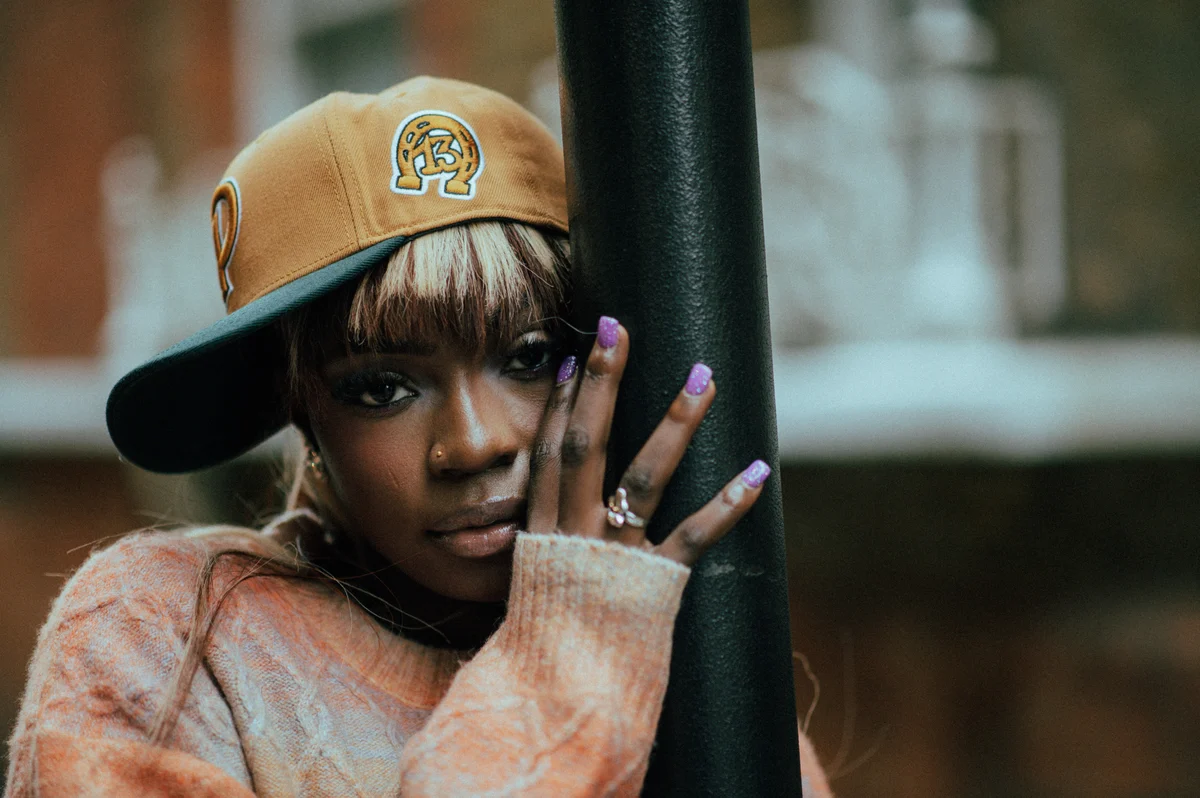
To Solana’s surprise, after releasing the song with no promotional budget, the reception was immense. Suddenly, the shelved single received shares from SZA and Tyla, it soundtracked more than 12,000 TikToks and it passed a million streams. By this point, Solana realised that her words do have reach — namely at their most authentic. "The song started taking off after the second or third video I saw on Instagram, and I was like, 'Yeah, that means we're not crazy’,” she laughs.
Yoruba is a tonal language, and the pitch of a word shifts its meaning. When a song is sung in Yoruba, it asks the melody to do some of the talking. That's part of what Solana is working with in the sound that she calls Yoru-Pop.
"It’s me bringing my culture, putting my culture into my music, because my music is literally me, and my culture is a huge part of me," she explains. When I ask what parts of Solana’s culture she appreciates the most, and what she focuses on showing through the music, she shares with an open sense of appreciation: “My language is really beautiful. The fashion, our dress sense is really beautiful. I think I just took bits from everywhere and put it into my music.”
Among those points of inspiration is Nigerian singer and rapper Asake, who has brought fuji’s rhythms into mainstream pop, and King Sunny Adé, singer, songwriter, multi-instrumentalist, and the pioneer of the Yoruban genre jùjú pioneer, a style of music influenced by what is coined as palm wine guitar music and dance drumming. Solana also takes influence from popular Western music, including Rihanna and Doechii — who, in a full circle moment, sang “Okunkun” on her Instagram live.
The momentum doesn’t stop at “Okunkun” for Solana. It contributes to a larger body of work, her debut EP, , a collection of songs which serve as a definitive introduction to Solana’s Yoru-Pop sound.
"I think this is a perfect time for it, because people are more interested in coming into my world and seeing what Solana is about, and I'm excited to bring them in," she says. "You get to experience life from the lens of a girl from the West." When I ask her to describe that world, she reveals just enough for intrigue, but leaves space for the songs to tell her story: “A girl growing up in the western part of Nigeria, and how she has experienced life, how she has seen things, stories she has to tell. It’s a whole lot of fun stuff.”