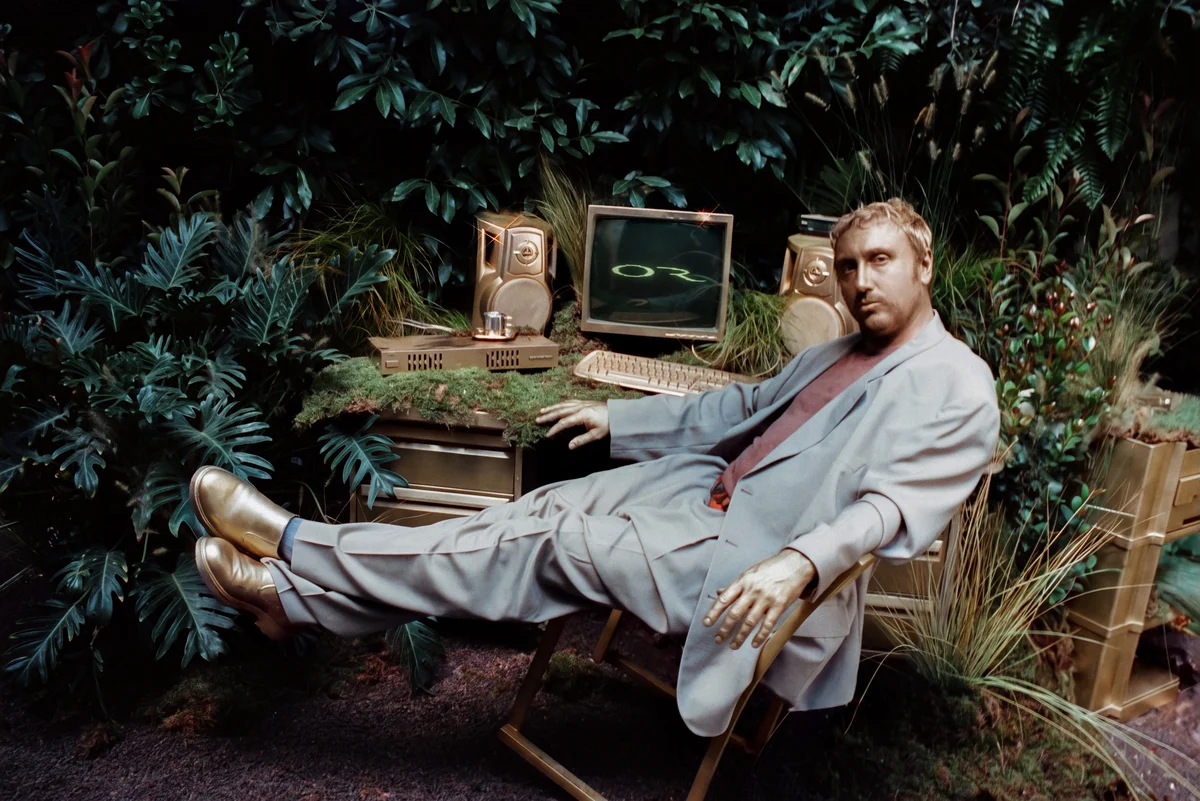
The experience left him feeling particularly vulnerable, and it is one reason he feels more personally attached to this album than to much of his previous work. The music itself became a way of reclaiming some of the excitement he had lost. Riverola describes the early compositions as “quite histrionic and megalomaniacal”, an attempt to reconnect with the energy of performing on a large stage at a time when even the idea of a functioning club felt almost dystopian. “What is the point of a stadium if you can't fill it with people? What is the point of a club if nobody can go?” he remembers wondering.
He eventually made around seventy projects, often spending hours on the sofa absorbed in their construction. “Sometimes I could spend eight hours working on this and without thinking about anything else.” When Nic Tasker later asked him, as part of an NTS programme, for any music made during lockdown, Riverola sent six finished renders. Tasker was intrigued and suggested turning the material into an album. Returning to those sessions, however, meant revisiting a particularly painful period. “Opening the projects actually hurt a little,” he admits, recalling a breakup, people around him who had died, and friends going through difficult moments of their own. He told Tasker he could only manage one project a week. Some sketches were almost complete; others were barely more than ideas. The album gradually emerged through this process of reconstruction, with Riverola trying to make the different fragments belong to the same world.
Part of that reconstruction involved embracing the unpredictability of the original recordings rather than ironing it out. In “Fractal Love Odyssey”, for instance, polyrhythms and sequences refuse to resolve in quite the same place, making the track particularly difficult to assemble. Riverola had applied randomisable rules within relatively stable musical parameters, allowing certain notes, lengths, and patterns to change from one repetition to the next. “It’s all probabilities,” he explains. “The probability that a certain note plays here but doesn’t play the next time around, or that a parameter becomes shorter or longer, that a sequence runs for eight steps or seventeen.”
Sometimes even he was surprised by the results. “There were projections that I didn’t even understand. I’d press play and think, what is this? How does this work?” Making the pieces coherent required a fair amount of musical sleight of hand. “It’s a bit like David Copperfield,” he laughs. He would join sequences halfway through, combine different recordings of the same melody, and automate the transitions so that the listener wouldn’t notice the cuts. “There’s a little bit of trickery involved.”