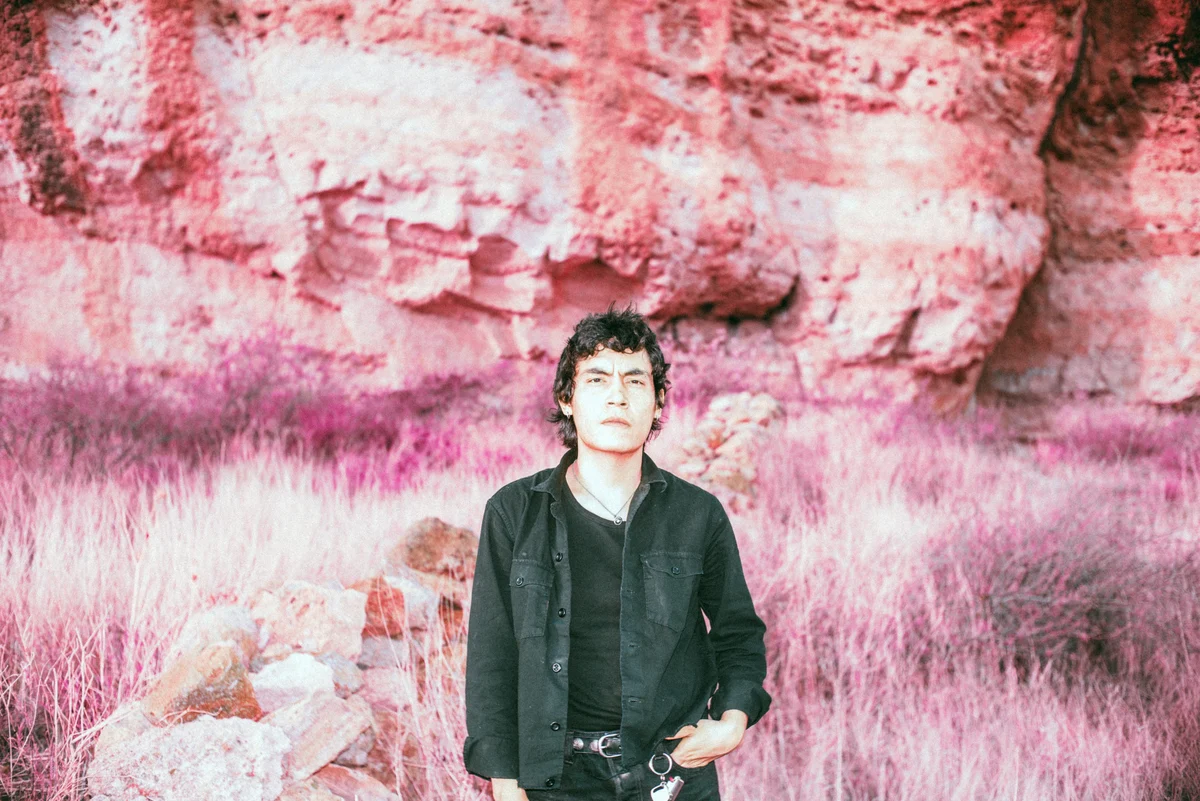
The change is audible on Sin Agua Es Ruta Yerma, but Maverick is careful not to confuse emotional maturity with leaving his younger self behind. The intimacy that defined his early work remains important to him. What has changed is his ability to find different ways of expressing it. “Now, the way I compose, I have more resources to talk about something,” he says. “So inevitably, there’s an evolution there that you can hear. And the way I understand relationships is also very different from when I was 16.”
Writing about love, however, continues to be a balancing game. There’s a fine line between sincerity and sentimentality, and Maverick knows when a song is threatening to cross it. When I ask him how he decides whether a lyric feels too cheesy or exposes too much, he returns to the importance of being genuine.
“The love songs that stayed on the album came from a genuine place, where I’m not forcing it,” he says. “The songs that didn’t make it were a bit over-elaborate or very forced. They came close to being cringey, and that’s why they didn’t stay in the end.”
He applies the same pressure test even after a song is finished. “When I get to the point where I’ve finished the song and it doesn’t convince me, because it has things that are too cheesy, and I feel it’s a bit performative too, I’d rather take it out.” There will, he trusts, be something else that feels right.
Maverick’s turn towards psychedelia began long before Sin Agua Es Ruta Yerma. At 16, he was already dreaming of making this kind of music, drawn to groups like Tame Impala and the layered angular sounds that can emulate some kind of friendly high. During the pandemic, he returned to those early influences with a different intention. Smoking plenty of marijuana at the time, he began to understand bands like The Beatles differently. He also found himself sucked into the addictive realms of cult film and the world creation that’s on display in films like René Laloux’s absurd Fantastic Planet or Richard Linklater’s surreal 2001 animated film, Waking Life.
“I feel privileged to be able to appreciate art without necessarily understanding it. I'm always open-minded about any kind of art, so that's not really a problem. I think films are what move me the most when it comes to composing. During the pandemic, I watched a lot of Gaspar Noé films and that whole world of cult, psychedelic films. That was a big thing for me. There are lots of films I really like that have this quality of feeling like a dream.”