was born in India in 1962, the year after Goa was liberated from Portuguese rule. My mother was English and my father was Indian. My maternal grandparents worked in a theatre company and toured the east doing Shakespeare plays. My father, Shashi Kapoor, was an actor who worked for my grandparents' theatre company and met my mother – Jennifer Kendal – there when he was 18. He then became a very successful movie star in India. They had a remarkable, unusual life. I thought it was normal.
In 1970, my parents decided to take a family holiday in Panjim in Goa. We stayed at the Mandovi hotel, an amazing place. I remember it vividly. We discovered a restaurant on the beach in a village called Saunta Vaddo, run by a seafarer, Anthony, who made incredible food. We fell in love with Saunta Vaddo. There was no electricity or running water back then. We went out exploring every day – there was always something to do. We swam, went fishing and read a lot. We rented a house called the Love House, because of the white heart painted on the roof – a shack on the beach that was previously inhabited by hippies and was full of books.
From then on, we spent every holiday there – Diwali, Christmas, Easter. Back then, if you took a ship to Goa from Mumbai it took 24 hours, and there were often no cabins left so you slept out on deck. But sometimes we drove and once my grandfather, who was a very bad driver, took us there. You couldn't use headlights because of the war in the east, so we used torches from the backseat to light the road. The whole family would come at Christmas, and my dad would appear with a turkey on Christmas Eve, and fried fish and prawns from Anthony's.
We became part of the village and we knew everyone. Eventually I started to record and photograph the people around me – our friends, weddings, ceremonies – characters I had known since I was eight. Then I started travelling to other parts of Goa with my brother, first on bikes, then motorbikes.
For me, this image of a big boat is very symbolic of everything that was amazing about Saunta Vaddo at that time. The whole village was involved, all the men were launching the boats out to sea to catch mackerel. A scout would look out for the schools, millions of them would come down the coast. There was a lot of excitement and shouting because, if they missed the catch, the next village further down would get them, so it was all a bit competitive.
As a child it was the most exciting thing, screaming and pushing this massive boat out, held together by tar and rope, and made the same way boats were made a century ago. The villagers would sing songs and drink feni, a local liquor; it was a way of life we had that doesn't exist any more. In many ways, that boat held the whole village and the old slow Goan way of life together. Then tourism hit and the fishers became taxi drivers and waiters – they could make a better living that way. Things changed.
I continued photographing Goa until about 1996. You can't recognise these places now, they're so built-up. I've made a book of the photographs as a tribute to my parents, and will exhibit them in Panjim next month. I like to romanticise that the picture shows the last time they fished like that.
I went around on my Royal Enfield motorcycle with my Nikon FM and Hasselblad, stopping in tavernas to have a beer and some fried fish. I was drawn to the Portuguese influence in Goa, a legacy of more than 450 years of colonial rule. I photographed religious festivals, (musical theatre) and (a traditional bullfighting sport native to the state). I do remember the hippy era in the 1960s and 70s in Goa very well but it never interested me. I never photographed it.
Music was always a very big part of life in Goa: serenading, singing, playing instruments – and drinking. And the amazing fish curry rice is the best. I still go there every year, but I don't go back to Saunta Vaddo – it's been devastated. At first it made me sad but now I just feel fortunate to have had this experience, to have lived like that and known what it was like. It was incredible. I'm still looking for places like it.
My Goa 1976-1996: Photographs by Karan Kapoor is at Serendipity arts festival in Panjim, Goa, 13-20 December.
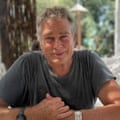
Mumbai, 1962
High point: I am just grateful that I have been able to have a successful career that provided for me and my family, doing what I love most
Top tip: Work with what is most personal and closest to your heart