o quote 1980s soft rockers Foreigner, I want to know what love is. And I want the Sainsbury Centre to show me. This big winter series tackles love in all its guises – and for now comprises two shows, one about smooching called The Last Human Kiss, another about desire and heartbreak called Ecstasy and the Aftermath.
The problem is, love is probably the biggest topic in human history, let alone art history. Think of the endless novels and poems and films; think of how many songs have been written, how many paintings painted. Love is an endlessly vast topic and this show barely scratches its surface.
The first exhibition begins, like so much love, with a single kiss – a gaunt couple locking lips on a 15th-century Italian vase. They don't look too thrilled about it but, hey, that's the reality of love. Sometimes it's not great. The show then takes you on a salivary journey through every possible kind of kiss: political, maternal, interracial, divine, familial.
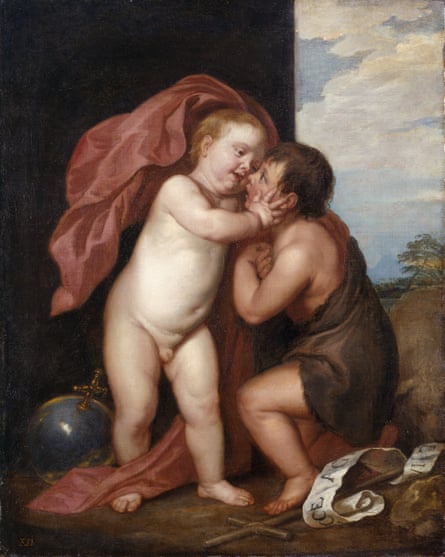
Allegories of righteousness and peace give each other an awkward peck in a William Blake watercolour, the infant Christ and St John the Baptist hold each other close in an Anthony van Dyck painting. Then a priest kisses a nun in a Benetton ad, the USSR's President Brezhnev kisses East German leader Honecker, Cupid kisses Psyche. And that's before you even get to the bulk of the show with its snogs by Edvard Munch, Wolfgang Tillmans and – obviously – Rodin, whose carved marble canoodle dominates the middle of the exhibition. It's enough to give you chapped lips.
What they want you to see is the vast complexity of kissing, to understand its different histories and implications. So they show it through a postcolonial lens, a religious lens, a political lens, and so on. But kisses are not some underexplored, subconscious thing – they're universal. We think about our kisses, we remember them, treasure them, long for them. The whole thing just feels obvious, like someone telling you the plot of a movie you've already seen.
There are works that deal with love more widely – including a Tracey Emin neon that says "The Heart has Its Reasons", as if anyone on Earth needs to see another Tracey Emin neon. But they feature no actual kissing. The concept isn't bad, and neither's the execution, but in the end there are only so many images of people necking you can hack before you get mental jaw ache. It's a whole exhibition of people locked in embraces, a whole show of painterly PDAs, and it wears thin.
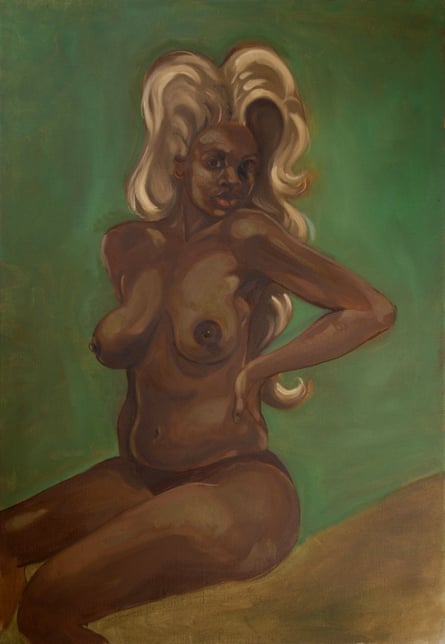
The second exhibition, Ecstasy and the Aftermath, tackles the joy of new love, the despair of heartache, and everything in between. That's where it really falls apart. There are some good works: a Somaya Critchlow nude, a set of deeply romantic and poetic Judy Chicago prints, a Jane Hayes Greenwood painting of leaking, breast-like plant forms, the Marina Abramović and Ulay video of him on the verge of unleashing an arrow into her heart. But the theme is so broad it sends you spinning.
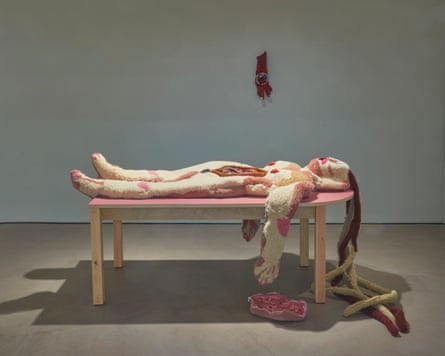
There are works about motherly love, romantic love, desire, the gaze, heartache, grief. There are photos of people dancing in queer nightclubs, because community is a form of love. There's a Paloma Proudfoot ceramic of gossiping mates, because really liking your pals is love, too. There's so much to explore, each of those themes could have been a whole exhibition in its own right, but it's all just been squeezed into one room.
The only way this could have worked is if they'd narrowed the focus. Or if they'd deleted all the wall texts, got rid of the faltering conceptual themes and restrictions and just whacked together a bunch of artworks about desire, adoration, romance, heartache and snogging and let you make your own way through it.
But if you want to know what love is, these two shows do actually provide a pretty good answer. Sometimes it's beautiful, sometimes it's joyful, but more often than not, it's a bit of a mess.